Navarra · KM 87
Puente la Reina
Listen to this story
What to Know
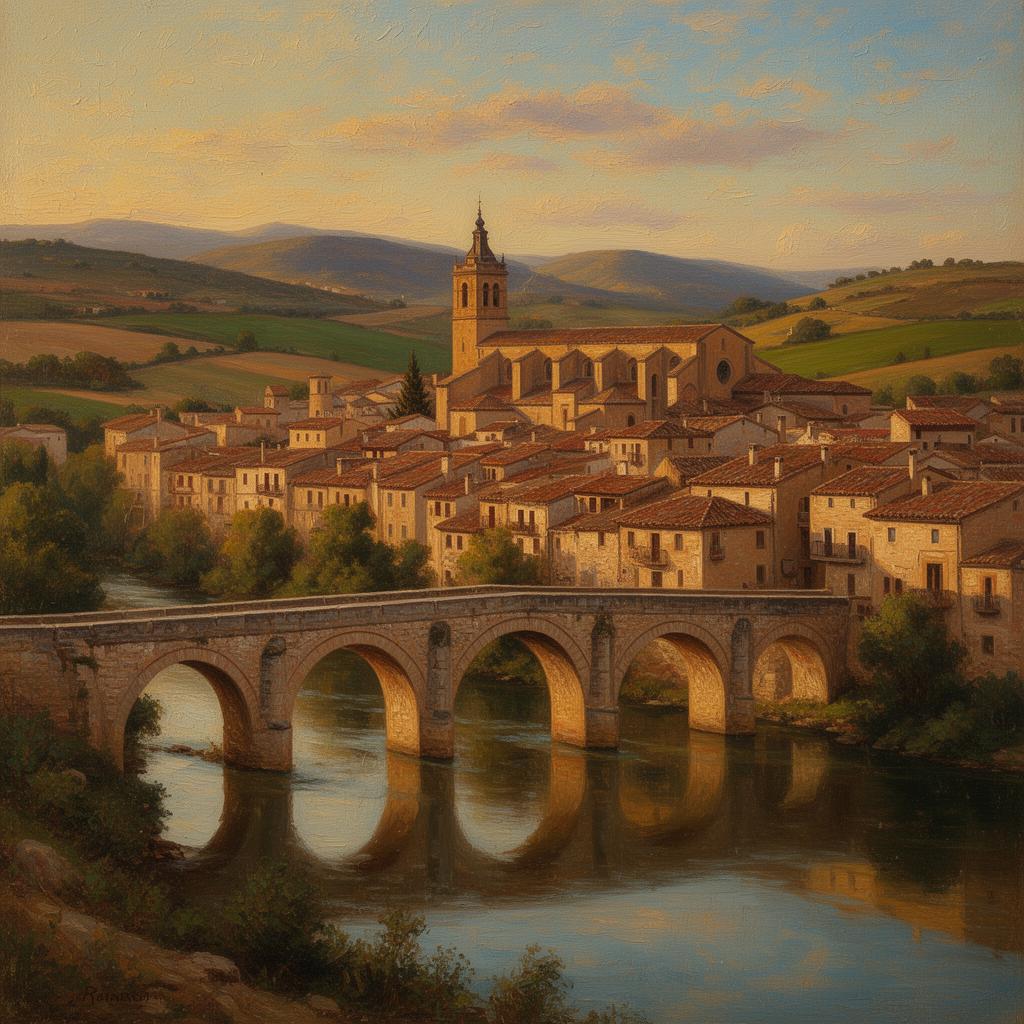
After leaving the larger city of Pamplona, the Camino winds through quiet countryside until it reaches the small but historically significant town of Puente la Reina. Its name, meaning "Bridge of the Queen," comes from the elegant medieval stone bridge that crosses the river Arga.
Built in the 11th century under the direction of Queen Muniadona, the bridge was constructed to help pilgrims safely continue their journey. Its six graceful arches have carried travelers for nearly a thousand years, making it one of the most photographed and symbolic spots on the Camino Francés.
Puente la Reina also marks an important meeting point. Here, the Camino Francés joins with the Camino Aragonés, meaning pilgrims who took different routes across the Pyrenees now walk together toward Santiago. The town itself has a calm, medieval feel, with narrow streets and historic buildings that still echo its long connection to pilgrimage.
Key Highlights: • Famous for its 11th-century medieval bridge built specifically for pilgrims • Important junction where two major Camino routes meet • Historic town with strong pilgrimage heritage • Peaceful and photogenic stop along the route • Named after Queen Muniadona, who supported the Camino
Pilgrim Reflection
“Puente la Reina reminds us that we don't walk alone. Even when our paths look different, they often come together. The bridge stands as a symbol of connection — between routes, between people, and between the past and the present. As you cross it, take a moment to remember that you are part of something much larger than your own journey.”